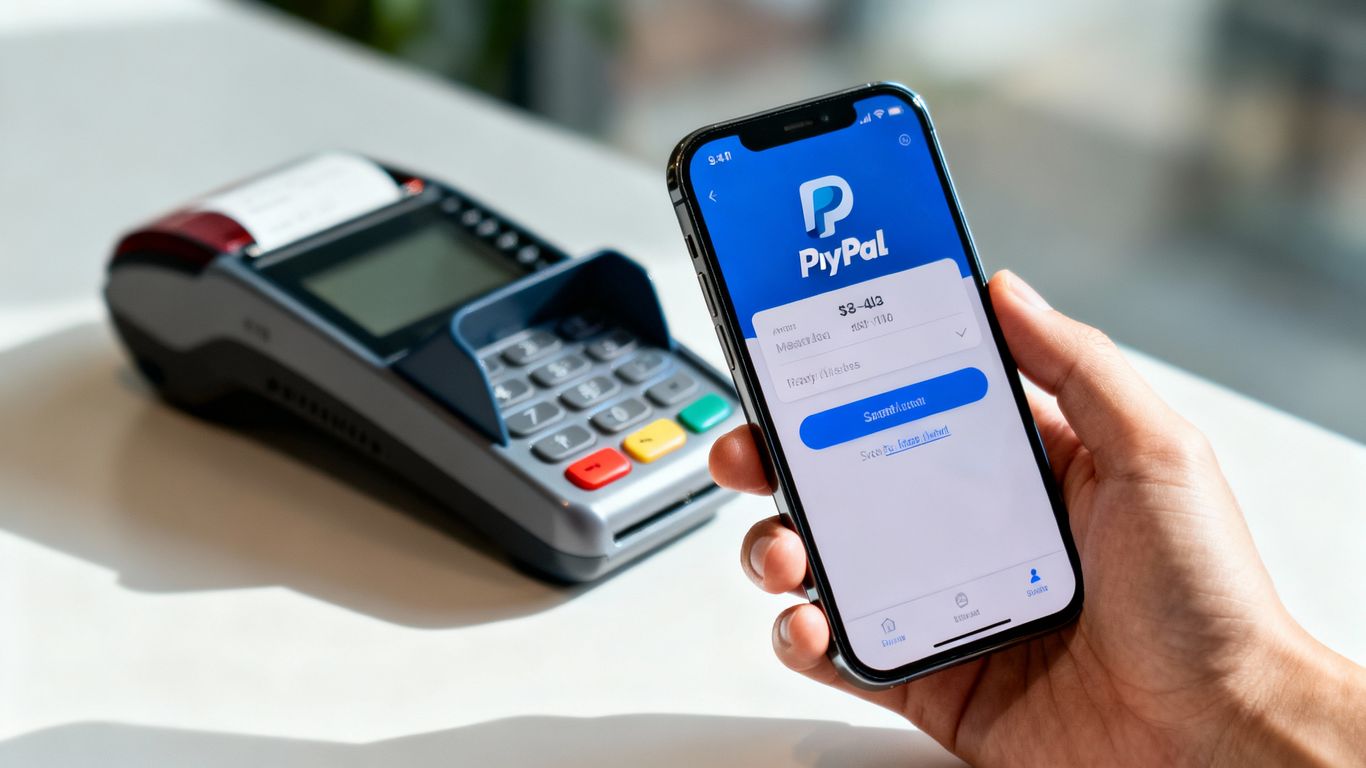
Store card at the counter or traditional bank card? 😮 Find out which costs less before signing up. Take advantage! 🚀
Everything is explained below ⬇️⬇️⬇️
Recommended Content:
Store Cards and the Bank of Portugal : Ranking of Store Cards in Portugal
A bank credit card usually has a more transparent APR and more management options than a store card, but a retail card can compensate with occasional discounts — the right choice depends on the total cost and how you will pay.
💳 The best credit and card options in Portugal — the complete list will be sent to your email.
In this article I compare store credit cards, traditional bank cards, and digital accounts to understand which best suits your shopping profile.
Don't waste any time and keep reading this article to understand everything!
Compare credit and card options with 100% online application in Portugal!
Yes, I want to meet! I don't need to right now.
How does a store card compare to a bank card?
Store credit cards are typically issued by a financial institution partnered with the retailer, and are designed for purchases within that chain or affiliated stores.
A traditional bank card is issued by a bank, accepted at any establishment with an ATM or international network, and usually has a more carefully defined credit limit.
A digital account, in turn, combines a debit card, its own app, and sometimes an associated credit card, all under the same institution.
| Minimum Income | Annuity | Installment | Benefits |
|---|---|---|---|
| Analyzed on a case-by-case basis by the institution. | Exempt on various entry cards | Defined in the Standardized Information Sheet | Compare available options |
What factors influence the choice between a store card, a bank card, and a digital account?
- Total cost of credit (APR), not just the monthly payment amount.
- Where can you use the card — only in-store or at any establishment?
- Ease and speed of approval at the counter.
- Cashback, points, or exclusive discounts from the chain.
- Annual fee and other associated fixed charges.
- Impact on your liabilities recorded in the Credit Information Bureau.
- Associated services: proprietary app, billing alerts, credit limit management.
- Easy cancellation if you stop shopping at that store.
Choose based on total cost, not on seller pressure — consider what truly matters in an approval process before deciding.
Does a store credit card have a higher APR than a bank credit card?
In many cases, yes: retail credit associated with store cards tends to have a higher APR than an entry-level bank credit card, especially outside of promotional campaigns.
The APR (Annual Percentage Rate) for any consumer loan in Portugal is subject to a quarterly ceiling set by the Bank of Portugal, but within that limit it can vary considerably between institutions.
Is it worth having both a store credit card and a bank credit card at the same time?
It can be worthwhile if you only use the store card to take advantage of occasional discounts and always pay in cash, thus avoiding interest.
If you realize you're using your store card to finance everyday expenses, it's a sign that you might need to review your budget.
Can a digital account replace both?
A digital account with a debit card solves everyday problems without interest charges, but it usually doesn't replace a credit card for installment purchases.
Some digital accounts already offer their own credit card, which can be simpler to manage than combining several store cards.
What are the risks of signing a store credit card at the counter?
The biggest risk is signing without reading the terms and conditions, pressured by the immediate discount on the purchase.
Always confirm the APR, the annual fee, and what happens if you miss a payment before accepting.
⚠️ Beware of promises of guaranteed approval at the counter, without any credit check. No reputable store or financing company waives this evaluation — be suspicious of anyone who insists on signing quickly or asks for any upfront payment to "secure" the card.
How to choose between a store card and a bank card?
Stop deciding solely based on the discount of the day — comparing prices takes just a few minutes and avoids surprises on your bill.
- Check your credit responsibilities at Bank of Portugal's Banking Customer Portal before adding another card.
- Request the Standardized Information Sheet (FIN) for the store card and compare the APR with a bank card with no annual fee.
- Simulate the total amount to be paid, including interest, and not just the monthly payment.
- Check where you can use each card — only in-store or at any establishment.
- Choose the card with the lowest total cost for your spending pattern, not the one that gives you the quickest discount.
After making your decision, activate your chosen card and set up billing alerts to track your spending.
Reassess your choice whenever your credit responsibilities change.
Call center
Save these official contact details for questions about consumer credit:
- Bank of Portugal / Banking Customer Portal — 707 201 409, weekdays from 9 am to 18 pm.
- Customer support line from the store itself or the financing company, as indicated in the contract or on the invoice.
Is it worth switching from a store credit card to a bank card?
It's always worth comparing: a bank card tends to be more versatile, but a store card can be worthwhile if you use little credit and only take advantage of discounts.
The downside of exchanging points is losing any benefits already accumulated at the store, such as points or specific cashback.
Ultimately, what matters is the total cost of credit, not which card seems easiest to get approved for.
- If you always shop at the same chain, see if it's worth it. Continente's Universo+ Card.
- If you already have active store financing, see What does this record at the Bank of Portugal?.
- If you're really looking for a bank card, start by Compare the best no-annual-fee options..
Choose based on total cost, not on sales pressure.
I hope this article has been helpful; if you still have any questions, leave a comment and we'll answer it.
Frequently asked questions about store cards and bank cards.
Is a store credit card always more expensive than a bank credit card?
Not necessarily, but in general, retail credit tends to have a higher APR than an entry-level bank card.
Can the store card be used to make purchases outside of the chain?
It depends on the type of card — some are for restricted use in the store, while others function as a broader credit card.
Can a digital account replace a store card?
Not always; a digital account solves everyday needs, but a bank credit card is usually better for installment purchases.
Do I need a good credit history to get a store credit card?
Approval always depends on the funder's analysis, including income and current liabilities.
Having multiple store credit cards can negatively impact your application for a bank card later on?
It can be a burden, because all active benefits are factored into the calculation of your debt-to-income ratio.
What is APR?
It is the rate that combines interest and loan charges into a single annual value, to facilitate comparison.
Is it worth canceling store credit cards that I no longer use?
It might be worthwhile, especially if they have an annual fee or are impacting your debt-to-income ratio.
How do I know which card has the lowest total cost?
Always compare the APR and the Standardized Data Sheet for each option before deciding.
Sources consulted: Bank of Portugal (bportugal.pt) — Notice No. 4/2017, Credit Responsibilities Center and Standardized Information Sheet; Banking Customer Portal (clientebancario.bportugal.pt); DECO (deco.pt) — guidance on consumer credit. Accessed July 2026.
⚠️ Disclaimer
This is an independent informational content portal, with no official connection to any financial institution or retailer. We do not carry out procedures on your behalf nor do we charge for them. The terms and conditions of each card change from campaign to campaign. Always confirm the information on official channels before signing up.